FOR MY UNCLE ‘MONTY’
There are stories that live in family photo albums. Then there are stories that live in history. My uncle, Monty Alexander Jesinowski, lived both.
He never talked about his service much. Not really. But sometimes, after a few XXXX stubbies bits and pieces would slip out. A name. A place. A sound. The family rarely the hard stuff though; the fear, the loss, the weight of it all. Just fragments. Enough to make you lean in. Enough to make you live the memory with him in that moment. Sometimes it was full on. Sometimes it was impossible not to feel his pain.
When I look at the records and the old pictures: the service number A111642, the dates 30 July 1968 to 31 July 1969, the unit: No. 9 Squadron, Royal Australian Air Force… I don't just see data or some guys at war. I see my Dad's brother. My Dad always spoke so highly of him, and always protected him when he was on home soil for as long as I can remember. Through all the struggles that came from post war life, Dad was always on his six. I respect him for that. When I read Unlce Monty’s story, I see a man that fought for his country and sacrificed so much, he sacrificed everything. I see pain. I see darkness in his struggle. But I feel pride. I have a big connection to him by working with veterans through the DVA. My company allows me to talk with aussie military vets every day. Some conversations are deeper than others, some purely business, some are just me there to listen while these warriors get some stuff of their chest. I wish I could have done this for Uncle Monty, I wish he was still alive sometimes so I could look after him like I am with some of these fellows I service today. Sometimes I think he’d be proud of me working as hard as I do in this business for his comrades. I like to think so.
Monty was was a Leading Aircraftman. An engine fitter by trade, a soldier by duty. And in the dust and heat of Vung Tau, that role was everything.
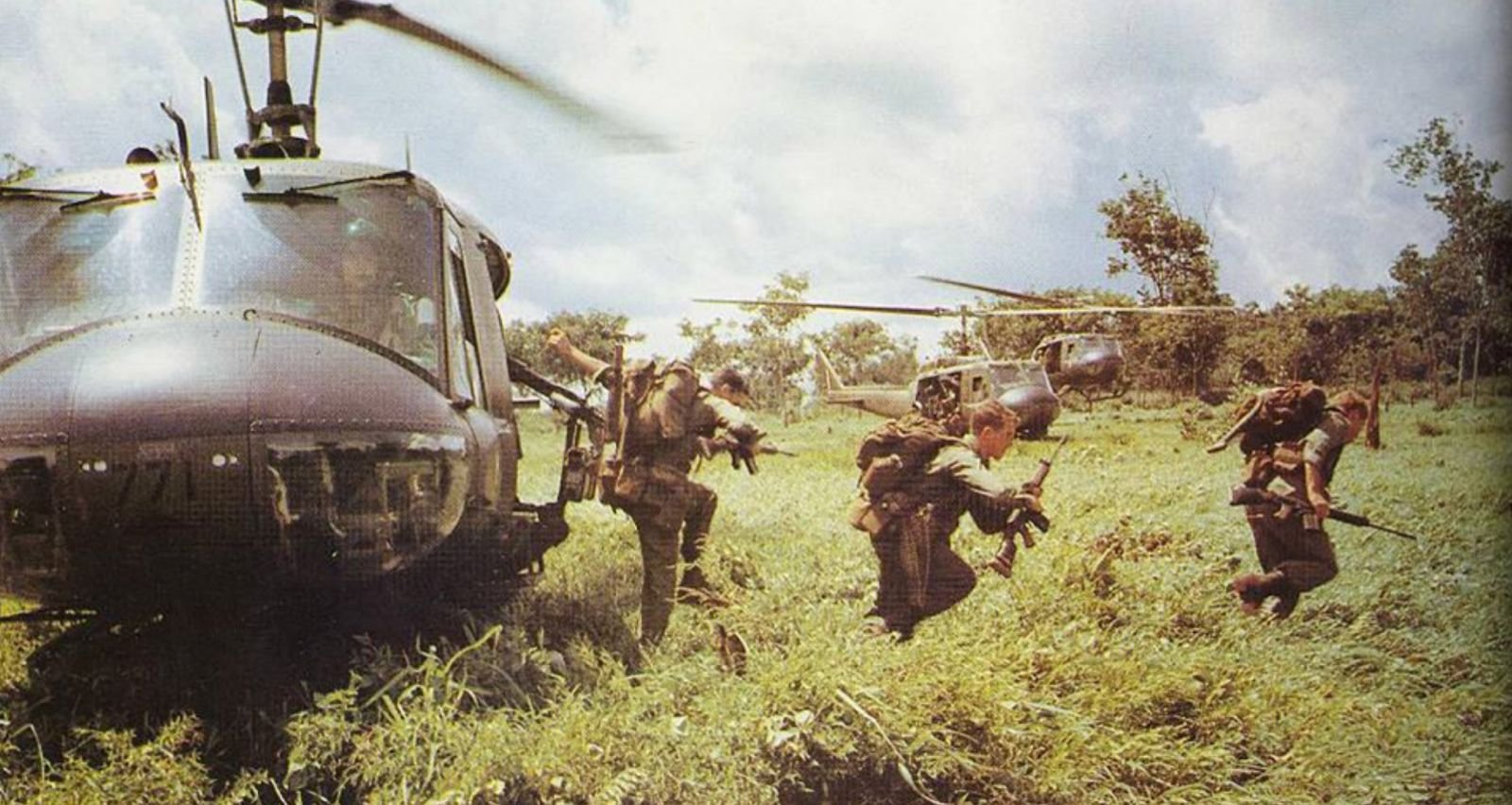
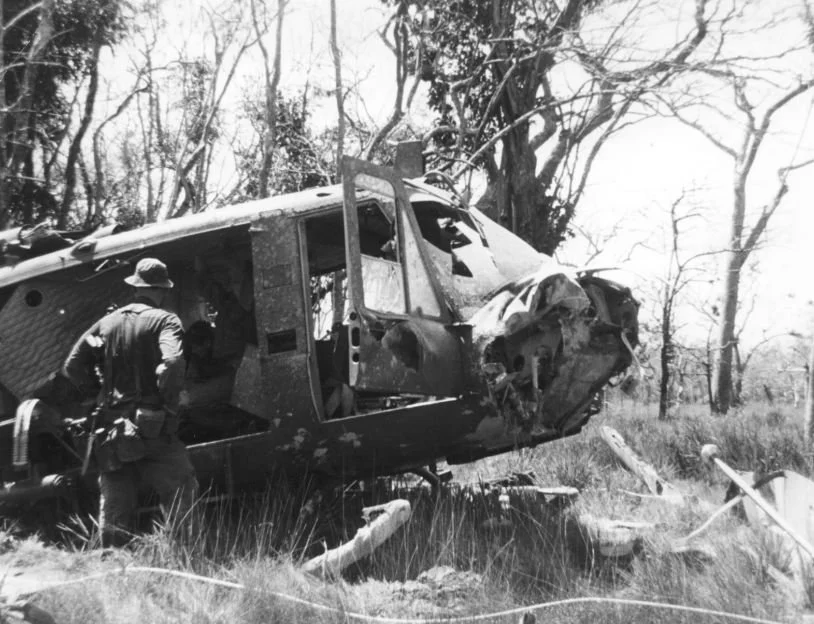
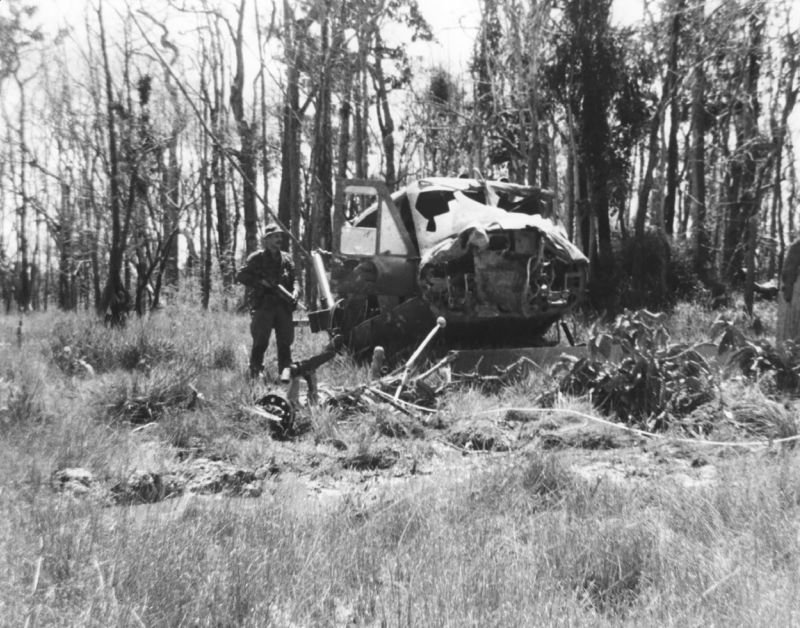
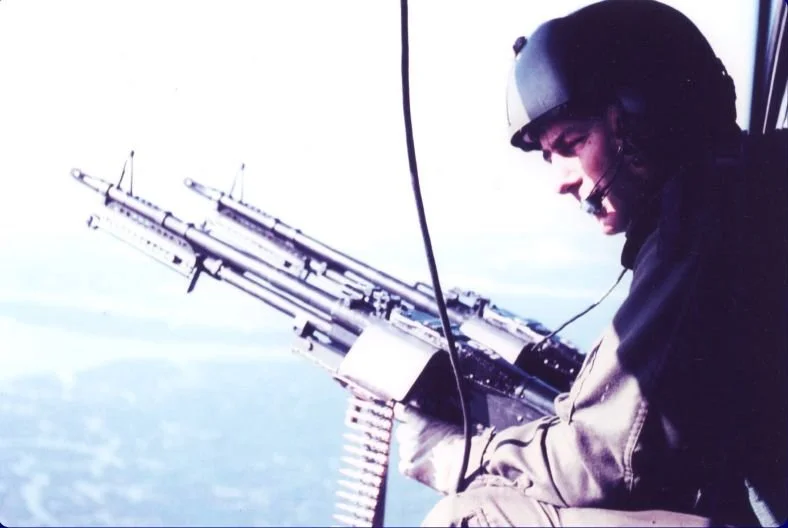
No. 9 Squadron flew the Bell UH-1 Iroquois—the iconic "Huey". Monty served aboard one of these workhorses, part of a four-man crew: pilot, co-pilot, crewman, gunner. Their mission was direct support of the 1st Australian Task Force. That meant troop insertions. Resupply runs. And, most critically, medevac—lifting the wounded from the edge of contact, often under heavy fire, and always to safety.
The numbers tell a fraction of the story. Over its deployment, No. 9 Squadron flew more than 237,000 sorties. They logged 58,768 flying hours—more air effort than any other RAAF unit in any campaign in our history. They operated, as the records state, "often under intense enemy fire."
There's a photograph in the Australian War Memorial collection that captures this brotherhood. It shows Monty, aged 21, with his crewmates: Flight Lieutenant Don Porter, Flying Officer Onno Dalmolen, and others. They're not posing for glory. They're just men, in uniform, just before another sortie mission. There are a few images I hold in my thoughts of Uncle Mont, this is one of them. The respect I have for this man is really something.
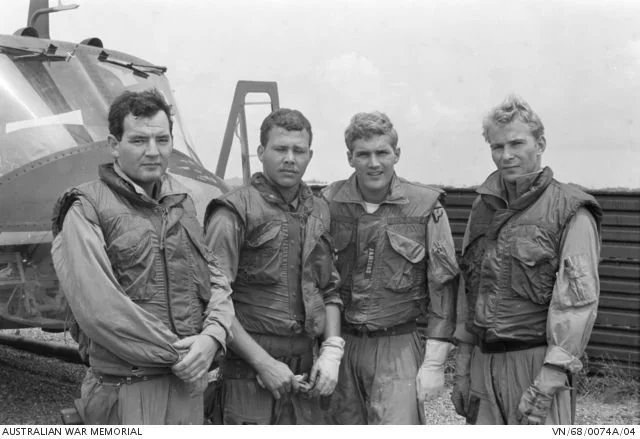
No 9 Squadron, RAAF
Group portrait of No 9 Squadron, RAAF, Iroquois helicopter crew who went to the rescue of five Australian diggers who were seriously injured when their Armoured Personnel Carrier (APC) detonated a mine in Phuoc Tuy province. Identified left to right: 217889 Flight Lieutenant (Flt Lt) Donald Herbert (Don) Porter, pilot, of Berala, NSW; 111642 Leading Aircraftman (LAC) Monty Alexander Jesinowski, 21, crewman, of Queanbeyan, NSW; 317811 LAC Edgar "Eddie" Jansons, 19, gunman from Noble Park, Vic; 317513 Pilot Officer (PO) Onno "Rocky" Dalmolen, 20, co-pilot, of Footscray, Vic.
I think about what that year meant. 367 days in a war zone. The roar of rotors. The smell of cordite and jet fuel. The tension of a hover while a patrol was winched through jungle canopy. The relief of a successful extraction. The silence after a medevac, when the only sound was the aircraft and the prayers you didn't say out loud.
Monty's service wasn't about seeking recognition. It was about the infantryman waiting for extraction. The wounded soldier counting on a fast ride to the surgeon. It was about doing the job, with precision and courage, day after day. That ethos, reliability, purpose, hard work, loyalty to the team…resonates deeply with me. It's the foundation of how I try to lead my own business today for them and that work ethic is amongst all the Jesinowsk’s.
No. 9 Squadron was disbanded in 1989. But in 2023, it was re-raised to operate the MQ-4C Triton drone—a testament to the enduring legacy of the unit my uncle served in. The platform changed. The technology evolved. But the commitment to supporting those on the ground? That remains.
Uncle Monty passed away in March 2016, aged 69. Leaving behind 2 daughters, he passed away after from a brain tumour. For my Dad Reg, Monty’s younger brother, also known as “The Favourite”, I know to this day, when his brother died, it was one of the darkest days of his life. He still wishes he had more time with him, and often mentions that he wishes he was there for him more. We all know that you were there for him the most Dad.
When I look at that AWM photograph, I don't just see a historical record. I see family. I see a young Australian who did his duty, with honour, in a difficult chapter of our nation's story. He wasn't chasing headlines. He was part of a crew. A squadron. A tradition of service.
The story my Uncle Monty is a story worth telling. Not just the missions flown, but the character forged. Not just the medals that might have been earned, but the integrity that was lived.
Monty Alexander Jesinowski. Leading Aircraftman. No. 9 Squadron. Royal Australian Air Force. Vietnam, 1968-1969.
We remember. We honour. We carry the lesson forward.
"Per Ardua Ad Astra" ("Through Adversity to the Stars")
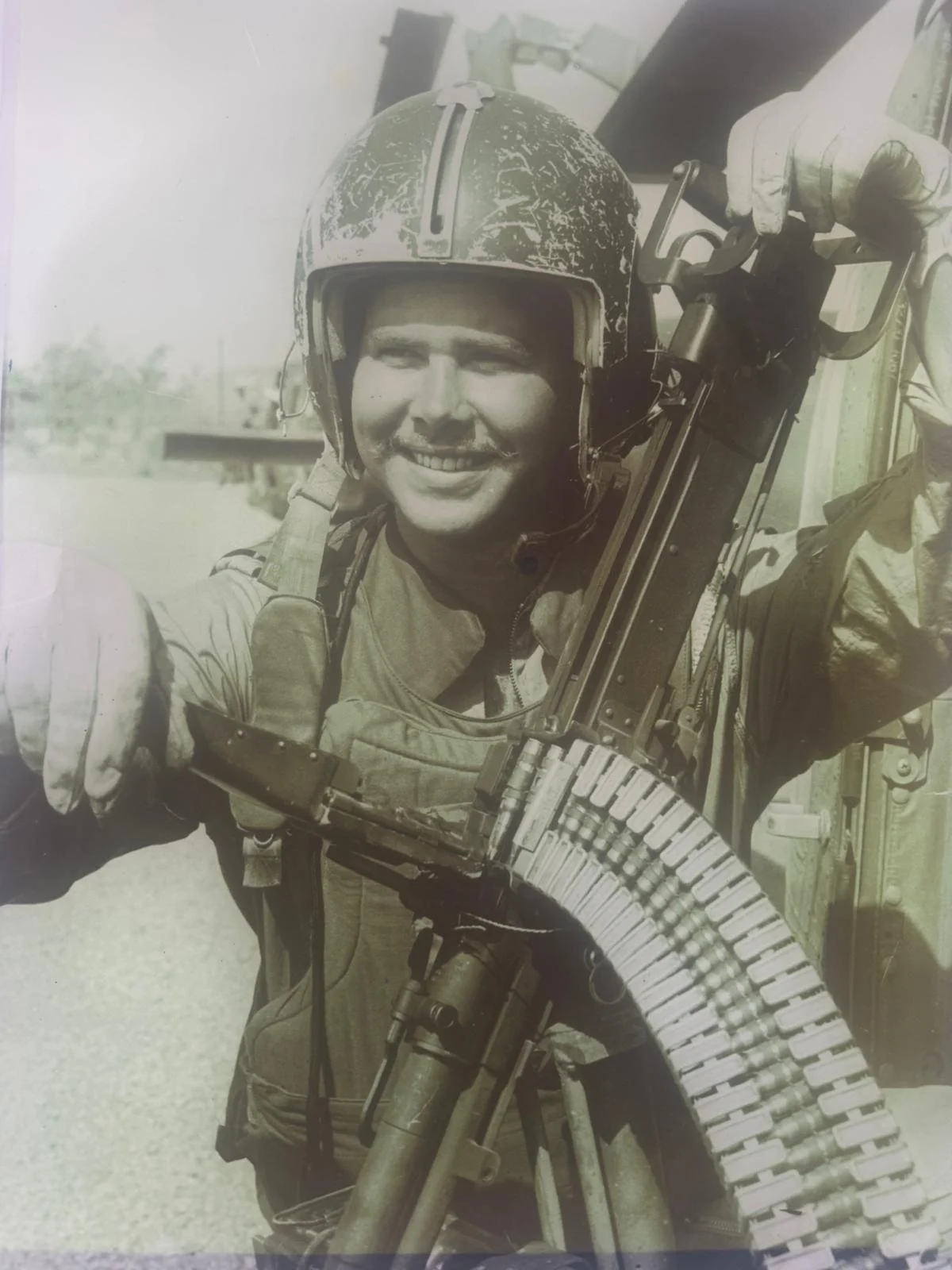
Monty Jesinowski